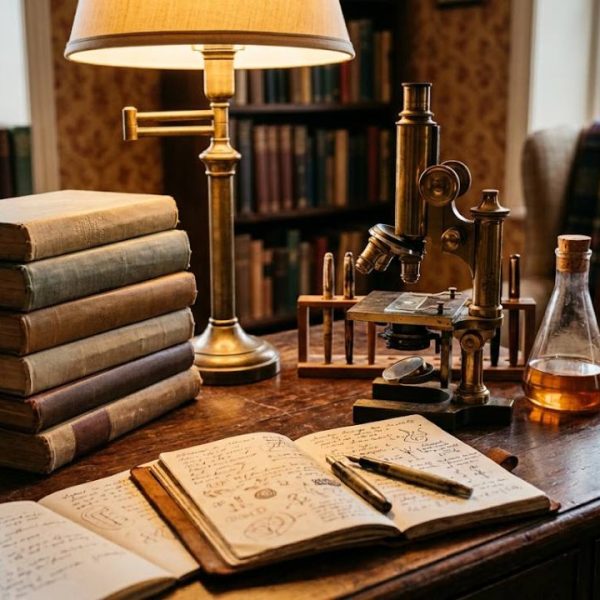
Science is often taught as a list of results. Newton's laws, the periodic table, the structure of DNA. What gets lost is the messy, very human path that led to each of them: the rivalries, the failures, the lucky accidents and the stubborn years of work that nobody saw. A good biography puts that path back. It turns a name in a textbook into a person you could have met.
Here are some of the scientist biographies worth reading, what makes each one special and why several of them only reached a global audience thanks to careful translation.
Why scientist biographies matter
Reading about how discoveries were actually made changes the way we think about science. It shows that breakthroughs rarely arrive in a single flash of genius. They come after years of dead ends, arguments with colleagues and experiments that went wrong. Biographies remind us that science is a human activity, shaped by curiosity, ambition and luck.
For students, these stories are motivating. For adults, they offer context that news headlines about new research rarely provide.
Marie Curie, a life of firsts
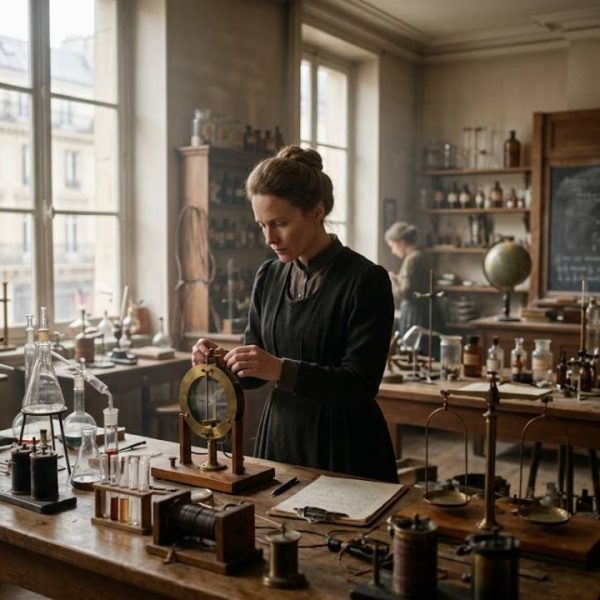
Few lives have been told as often as Marie Curie's, and for good reason. Born in Warsaw, she moved to Paris with little money, studied in a freezing attic and went on to become the first person to win Nobel Prizes in two different sciences. Her biographies cover not only the discovery of polonium and radium but also the grief of losing Pierre, the public scandals she faced and her work driving mobile X-ray units to the front lines in the First World War.
The Nobel Prize archive holds her lectures and biographical notes, which make a good companion to any book about her.
Dmitri Mendeleev and the periodic table
Mendeleev is a perfect example of a scientist whose story was long hidden from English readers. Most of his letters, notes and early biographies were written in Russian. The popular image of him arranging cards with element names during a sleepless night is only part of the tale. He also worked on oil production, measurement standards and even the design of a balloon flight to observe an eclipse.
Much of what English readers now know about him depends on scholars who did careful english russian translation of archives, letters and technical papers. Without that work, his personality and his wider contributions would remain almost invisible outside Russia.
Charles Darwin, the reluctant revolutionary
Darwin's voyage on the Beagle is well known, but the best biographies focus on the twenty years that followed. He collected evidence, bred pigeons, corresponded with naturalists across the world and hesitated to publish, fearing the reaction his ideas would provoke. The arrival of a letter from Alfred Russel Wallace, who had reached similar conclusions, finally pushed him to act.
His biographies show a cautious, anxious and deeply devoted family man, very different from the confident figure often imagined.
Rosalind Franklin and the photograph that changed biology
Rosalind Franklin's X-ray images of DNA were crucial to understanding its double helix structure. For decades, her contribution was underplayed. Modern biographies set the record straight, describing a meticulous experimental scientist who later did important work on viruses before her early death at 37.
Scientists from Eastern Europe we rarely hear about
Many brilliant scientists from Ukraine and neighbouring countries remain little known in the English-speaking world. Ivan Puluj studied X-rays before Röntgen made them famous. Serhiy Korolev, born in Zhytomyr, led the Soviet space programme that launched the first satellite and the first human into orbit. Mykola Amosov became one of the leading heart surgeons of the twentieth century.
Publishers and museums working on these stories increasingly commission english to ukrainian translation and the reverse, so that biographies, exhibition texts and archive materials can travel in both directions.
How biographies travel between languages
A biography of a scientist is a special translation challenge. It mixes storytelling with technical terms, historical names, quotes from letters and references to old units and institutions. Translators working on long books often use a cat translation tool to keep names, terms and recurring phrases consistent across hundreds of pages. That consistency matters. A reader should not meet three different spellings of the same laboratory in one book.
Good translation is what allows a scientist's life to become part of world culture instead of staying locked in one language.
Tips for choosing a good biography
- Look for authors who used primary sources such as letters, notebooks and lab records.
- Check whether the book explains the science clearly without oversimplifying.
- Prefer biographies that show the person's weaknesses as well as strengths.
- For translated books, look at the translator's background and notes.
- Read more than one account of famous figures. Perspectives differ a lot.
Where to start
If you are new to the genre, begin with a scientist whose work you already know a little about, then branch out. Many readers start with Curie or Darwin and end up discovering lesser-known figures from other countries. Pair each book with a documentary or a museum visit and the stories become even richer.
The people behind the discoveries
Every discovery we take for granted began with a person asking a question. Biographies let us sit beside them as they searched for answers. Reading their lives makes science feel less like a set of facts and more like a great, ongoing human adventure.
Publishers face that consistency problem at book length, where one mistranslated unit or title can repeat for hundreds of pages. Careful editors therefore check translated quotations, letters and technical terms against the originals before a biography goes to print. Many use professional translation services for this work because a life story must sound natural to new readers while remaining faithful to the archive behind it. When that balance holds, readers remember the scientist rather than noticing the translation.